
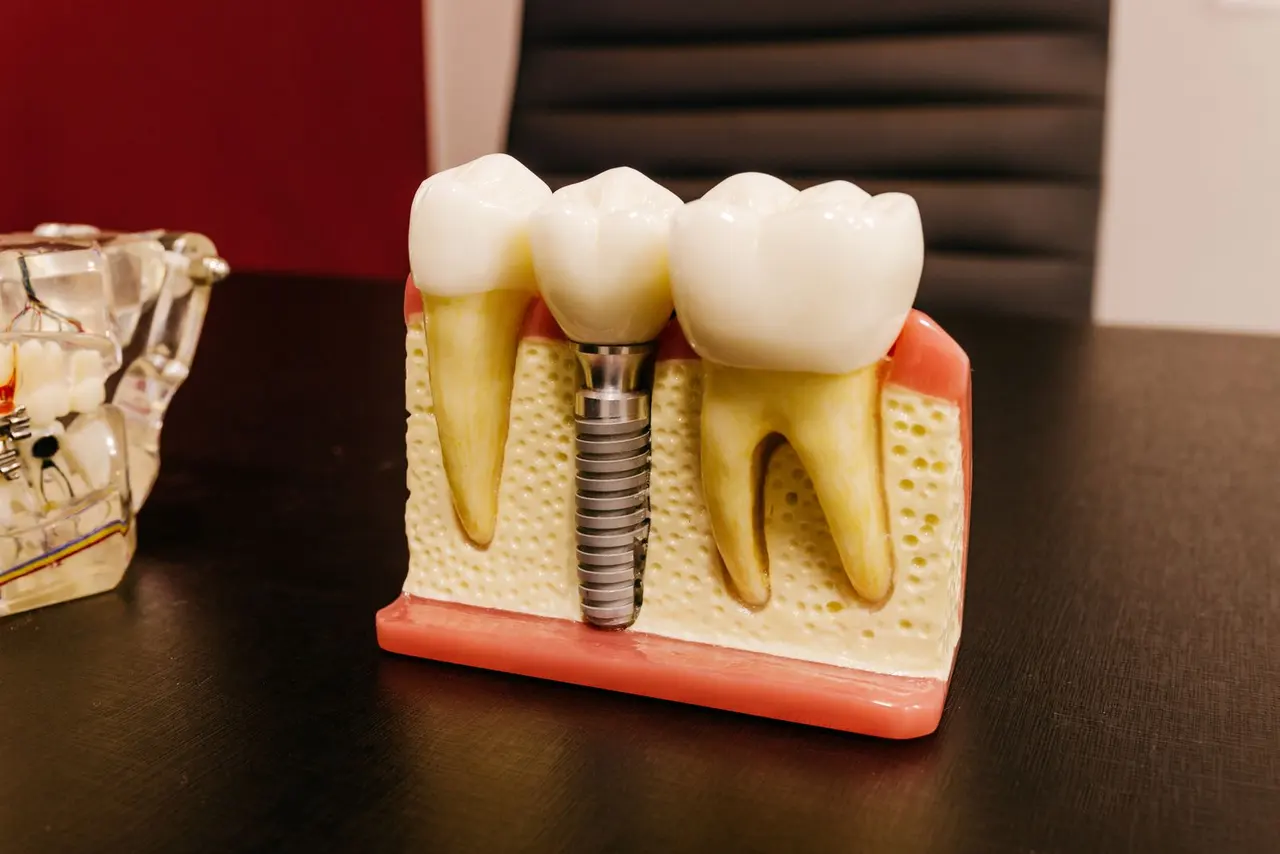
Stage 1: consultation and planning
Your dentist reviews your health, examines your mouth and usually takes X-rays or scans to look at the bone and surrounding teeth. They explain whether an implant may be suitable, what the process involves and the other options, such as a bridge or denture.
Stage 2: preparing the site
If a damaged tooth needs to come out, this may be done first. If there is not enough bone, a bone graft may be discussed, which adds time to the plan. Gum health is also treated before surgery.
Stage 3: placing the implant
The implant is placed in the jaw under local anaesthetic, sometimes with other options for comfort. The gum is then closed over or around it. Mild swelling and soreness are common afterwards, and your dentist will give you aftercare advice.
Stage 4: healing
The implant needs time to join with the surrounding bone, a process called osseointegration, which commonly takes a few months but varies between people. A temporary tooth may be used in some cases while you heal.
Stage 5: the abutment and crown
Once healed, a connector piece (abutment) is attached and an impression or scan is taken so the crown can be made to match your teeth. The final crown is fitted, and your bite is checked.
Common questions
It varies, often several months, depending on healing and whether bone grafting is needed. Your dentist will explain the likely timeline.
Yes. As with any surgery there are risks, such as infection, implant failure and nerve irritation. Your dentist will discuss them before you decide.
Victor Crescent Dental Clinic offers dental implant consultations. Phone 03 9704 6166.
This information is general in nature and does not replace advice from a registered dental practitioner. Suitability, timeframes and outcomes differ between individuals, and all dental treatment carries risk. Your dentist will discuss the benefits, risks and alternatives that apply to you.